
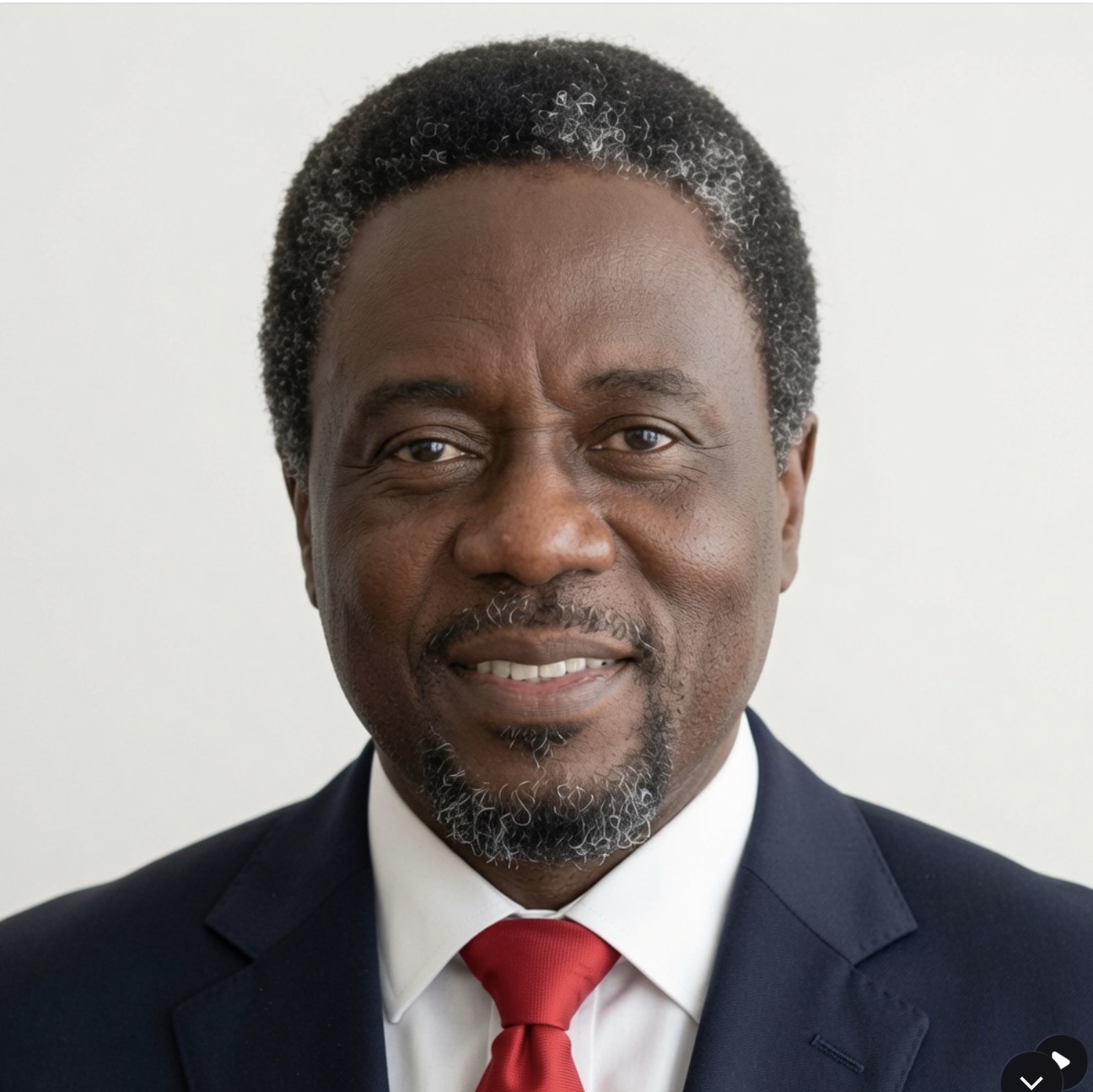
Seeing a different future
When I founded eTranzact in 2003, Nigeria was still very much a cash-driven economy. If you wanted to pay someone, you often had to physically move money. You visited a bank, stood in a queue, filled out paperwork or travelled to complete a transaction.
I kept asking myself a simple question: why should people have to move physically for their money to move? And another bothered me even more: why should it be so difficult for customers of different banks to send money to one another?
I believed the future of financial services would not be defined by individual banks, but by the infrastructure connecting them. And I believed the mobile phone would become one of the most important instruments for moving money. Remember, this was 2003. Smartphones as we know them did not exist. But if people could communicate instantly using a mobile phone, there was no reason they should not one day move money just as easily.
That belief became the foundation of eTranzact.
“Go and do it, and tell us how it is going.”
In 2003 I approached the regulators to explain what we were building: a system that would let people move money electronically, including through their mobile phones. The regulators listened, but I could tell they did not believe it was possible. I think they genuinely felt sorry for me. They probably thought I was dreaming.
There was no licensing framework for what I was proposing, and no regulations for mobile money. So their answer was simply: go and do it, and tell us how it is going. I have never forgotten those words.
It was not an endorsement — they had no framework for something they had never contemplated. But I took it as an opportunity. We kept building, worked with financial institutions and proved that mobile financial transactions were not just possible but practical. Nigeria introduced mobile money licences around 2011–2012. By then, we had spent years pursuing the vision.
“Sometimes the greatest challenge for an innovator is not creating the future, but persuading others that the future is possible.”
Infrastructure behind the bank, not against it
Our earliest challenge was not building the technology. It was convincing people the technology was needed. Banks were used to owning their systems and operating within their own networks. We proposed something different: a shared infrastructure through which many banks could connect, with each bank offering services under its own brand.
There were real questions about security, reliability and regulation. It was not enough to explain what the technology could do — we had to demonstrate it, and earn trust. One early milestone was building a mobile banking platform for Standard Chartered Bank in West Africa. It confirmed our philosophy: we did not need to compete with banks for their customers. We could help banks serve those customers better.
Every connection strengthened the network. We were building something bigger than any single institution.
Recognition, then a public company
In 2003 I received the Computerworld Honors Gold Medal of Achievement in San Francisco. It was more than a personal award. At a time when Africa was rarely discussed as a centre of financial technology, it said that technology built in Africa could stand alongside innovation anywhere. We did not need to import every solution. We could build world-class technology ourselves.
In January 2008, eTranzact received the Central Bank of Nigeria’s Most Innovative Product of the Year award. On 7 August 2009, eTranzact International PLC was listed on the Nigerian Stock Exchange — six years after we started with a vision.
Awards can validate a vision. Only execution turns it into something that changes lives. And I never saw the listing as a destination. My ambition was never simply a successful Nigerian payment company. It was infrastructure that could serve Africa and connect our continent to the world.
Building when nobody was watching
Success is not always loud. There were years when we were not the loudest company in the industry. New players arrived, fintech investment accelerated, and companies that did not exist when we started attracted enormous attention.
Being first does not mean you will always be the most celebrated. And being the most celebrated does not mean you have built the most enduring business. Entrepreneurship is not a popularity contest.
So we kept building. We strengthened our switching, expanded our relationships with banks and mobile money operators, invested in technology and connectivity, and earned the regulatory trust needed to operate across jurisdictions. Financial infrastructure takes trust, security, reliability and compliance — and those take time. Time spent building strong foundations is never wasted.
“Infrastructure is often most valuable when people no longer notice it — because it simply works.”
From connecting banks to connecting economies
Africa did not only have a payments problem within countries. It had a connectivity problem between them. A bank with excellent domestic systems could still struggle to transact with institutions next door. Mobile money networks and banking systems were often disconnected. Businesses trading across borders faced unnecessary friction.
That thinking shaped eTranzact Global. We extended our infrastructure into Ghana, Uganda, Sierra Leone and Cameroon — where we power NPSI, the National Payment Switch Infrastructure, in partnership with the Government of Cameroon. We connected banks, mobile money operators and payment providers for domestic and cross-border flows, and became a participant in the Pan-African Payment and Settlement System.
In 2025, the eTranzact group processed 650 million transactions worth US$89 billion.
Connecting Africa to the world
I want a business in Uganda to pay its supplier in China as easily as it pays a supplier in Kampala. I want an entrepreneur in Ghana to receive money from the United Kingdom without delay or excessive cost. I want an African fintech to launch across many countries without spending years integrating with every bank and mobile money operator. And I want African businesses to take part in global commerce without being disadvantaged by where they are located.
That is why we are investing in instant settlement, cross-border payments, global payouts and embedded finance — and building infrastructure other institutions can use to create their own products. Africa has extraordinary entrepreneurial energy. What is often missing is not ambition or talent, but the infrastructure to operate across borders. We can help close that gap.
Three lessons
Believe in your vision before the market does.
In 2003, mobile payments were unfamiliar to most people. Had we waited until everyone understood, we might never have started.
Build for the long term.
Technology changes and competitors emerge. But if you solve a fundamental problem, the opportunity does not disappear. It grows.
Never be a prisoner of past achievements.
I am proud of what we pioneered. I am far more interested in what we can still build.